Bridging the gap between classroom learning and global academic contribution.
Nexus Junior Scientists Journal was founded on a simple belief: curiosity should not be limited by credentials. We exist to provide a rigorous publishing outlet for Early Career Researchers (ECRs): including high school students, undergraduates, and independent scholars publishing their first major work.
We believe that the "scientific method", defined by critical inquiry, evidence-based analysis, and structured argumentation, applies to every discipline. Whether you are analyzing data in a laboratory or deconstructing historical narratives in an archive, Nexus is the place where your journey as a published researcher begins.
We welcome submissions from all academic disciplines. We particularly encourage interdisciplinary work that connects distinct fields.
We understand that for many of our authors, this is their first experience with academic publishing. Our peer-review process is designed to be rigorous yet constructive.
To ensure fairness, reviewers do not know the author's identity (and vice versa).
Our reviewers provide detailed feedback not just on the scientific findings, but on academic writing style, structure, and argumentation.
Knowledge should be accessible to everyone. Nexus is a fully Open Access journal.
All articles are published under the CC BY 4.0 License.
You retain full ownership of your work.
Your paper will be indexed and searchable via Google Scholar.
Meet the dedicated researchers guiding the Nexus Junior Scientists Journal.
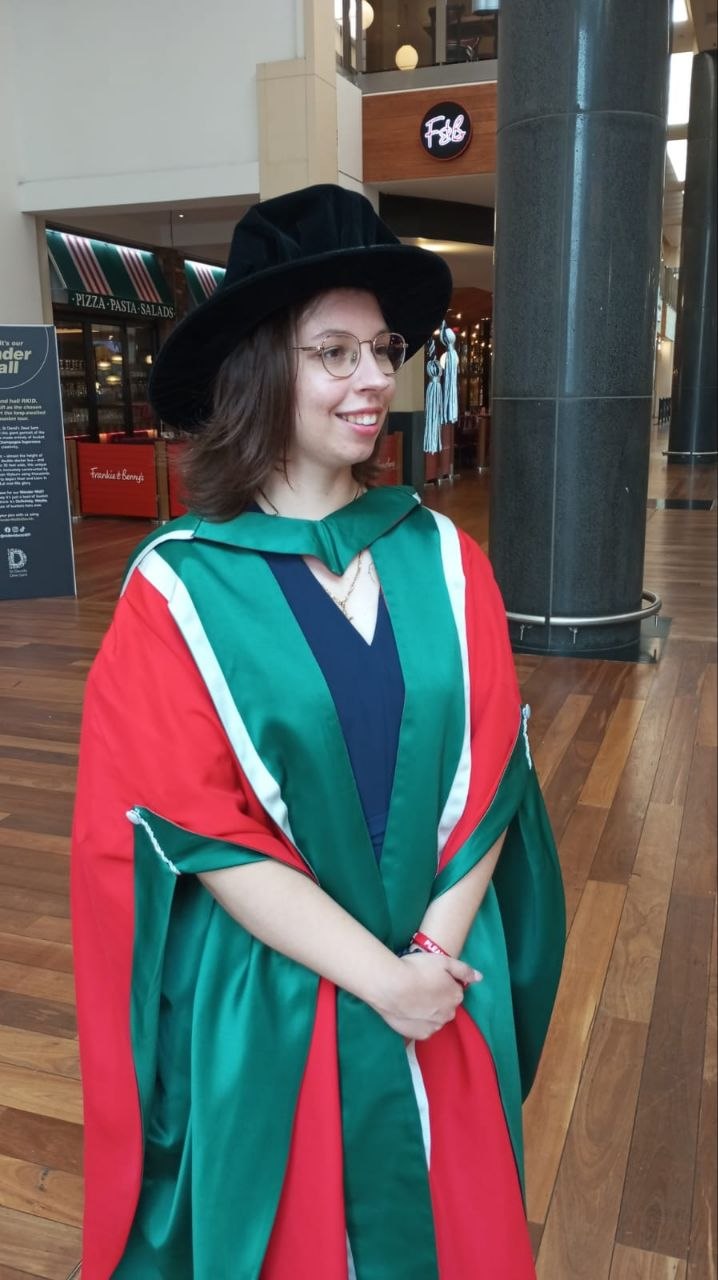
My main research interest concerns decision-making processes and how these unfold in the brain over time and which areas they involve. Decision-making mechanisms are usually studied with techniques such as behavioural experiments and fMRI, but during my PhD, I focused on studying them with magnetoencephalography as well, in order to uncover the temporal profiles of different types of decision-making.
I graduated summa cum laude in Psychological Sciences and Techniques at the University of Bologna in 2018 with a dissertation on episodic memory and episodic future thinking.
In July 2020, I received my MSc in Cognitive Science at the University of Trento and my thesis included both behavioural and MEG data about how the category of a distractor impacts visual working memory performance. In December 2024, I successfully defended my PhD thesis on value-based decision-making processes and in July 2025, I was awarded my PhD degree at Cardiff University.
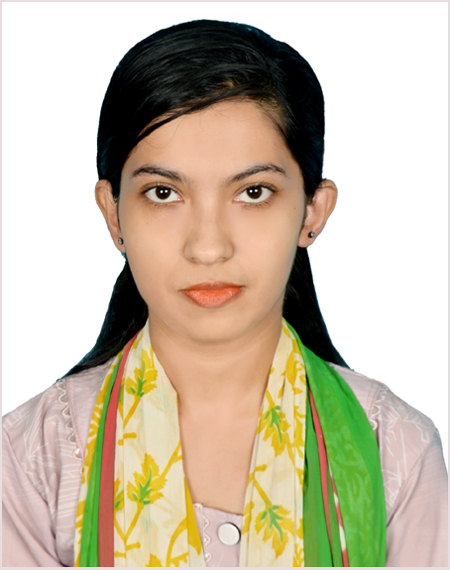
Hassan Jubair is an accomplished researcher and executive leader dedicated to advancing scientific discovery. As the Founder and Chief Scientific Officer of the HR Institute, he leads global research initiatives and mentors emerging scientists.
He is a prolific first-author researcher with multiple publications in high-impact Q1 journals, focusing on machine learning, clinical diagnostics, and sustainable technologies. His scientific contributions have earned him prestigious accolades, including the CREST Gold Award from the British Science Association, first place in the 2024 Global Research Association Competition, and a top 4 global ranking in the UNDP Solving for Humanity Challenge.
A full member of Sigma Xi and a selected Young Researcher for the Heidelberg Laureate Forum, Hassan brings a wealth of high-level academic expertise. With extensive experience completing peer reviews for top Q1 journals and being session chair in IEEE conferences, he is committed to upholding rigorous standards and empowering early-career researchers at the Nexus Junior Scientists Journal.
Our dedicated panel of experts ensuring the rigorous academic quality of NJSJ.
PhD Student & Graduate Research Assistant
Northeastern University, USA
Expertise: Biomedical Engineering, Biomaterials, Tissue regeneration, Gut-on-a-chip, Microbiome, Bioinformatics.
Educational Consultant
Pikdigg Consultancy Firm, Canada
Expertise: Aquatic Ecosystem Health, Environmental Microbiology, Ecotoxicology, Cytogenetics, Biodiversity Conservation.
M.Phil, Chemistry
Jagannath University
Expertise: Computer-Aided Drug Design, Vaccine Design, and Bioinformatics.
Research Assistant
Shahjalal University of Science and Technology
Expertise: Public Health, Biostatistics, Economics, Data Science.
Executive, Operations Engineering
Air Astra
Expertise: UAVs, Micro Air Vehicles, Flight Dynamics and Controls, CFD, Aerodynamics, Aerospace Materials.